Dishes to try
Which national dishes in EU countries are worth trying?
One dish to order in each of the 27 EU countries, plus the local foods the EU protects by law, so you know what the real thing is called.
The short version
Every EU country has a dish worth planning a meal around, from Finnish rye pasties to Maltese pastizzi. The EU also protects 1,576 food names by origin (PDO and PGI, as of 19 October 2026), and Italy, France and Spain hold more than half of them. Names such as feta, Pizza Napoletana or Prekmurska gibanica can only be used if the food follows the registered rules. A food tour is the fastest way to try several dishes; a market is the cheapest.
On this page
Who is this guide for?
Travellers who want to eat what locals are proud of, in any of the 27 EU member states. For calories and restaurant prices, see our guide to national dishes, hotel breakfast prices and calories.
What do the EU food labels PDO, PGI and TSG mean?
The EU reserves registered food names for producers who follow a written specification. There are three labels:
- PDO, protected designation of origin (red and yellow logo): the names with "the strongest links to the place in which they are made", in the European Commission's words. Examples: feta, Parmigiano Reggiano, halloumi.
- PGI, protected geographical indication (blue and yellow logo): at least one stage of production happens in the named region. Examples: Nürnberger Rostbratwürste, Slovenská bryndza.
- TSG, traditional speciality guaranteed (blue and yellow logo): protects a traditional recipe or method, not a place. Pizza Napoletana and Finnish karjalanpiirakka can be made anywhere, but only to the registered recipe.
None of these labels rates taste. They tell you the name is genuine.
Which countries have the most protected foods?
We counted the food names with PDO or PGI status in the EU's official register, eAmbrosia, on 19 October 2026. Italy leads with 332, then France with 283 and Spain with 230: together, 845 of the 1,576 names. Estonia (sõir, a curd cheese) and Malta (ġbejna, a sheep's cheese) have one each.
A small count does not mean a poor food culture. The register only lists names producers applied for, and TSGs are not in this chart: Poland, for example, has eleven, including kabanosy sausages, according to a list compiled from the register.
What should I order in each EU country?
One national favourite per country, and the protected names to look for there (status as of October 2026). The dishes themselves are not all protected.
| Country | Order this | What it is | Protected names to look for |
|---|---|---|---|
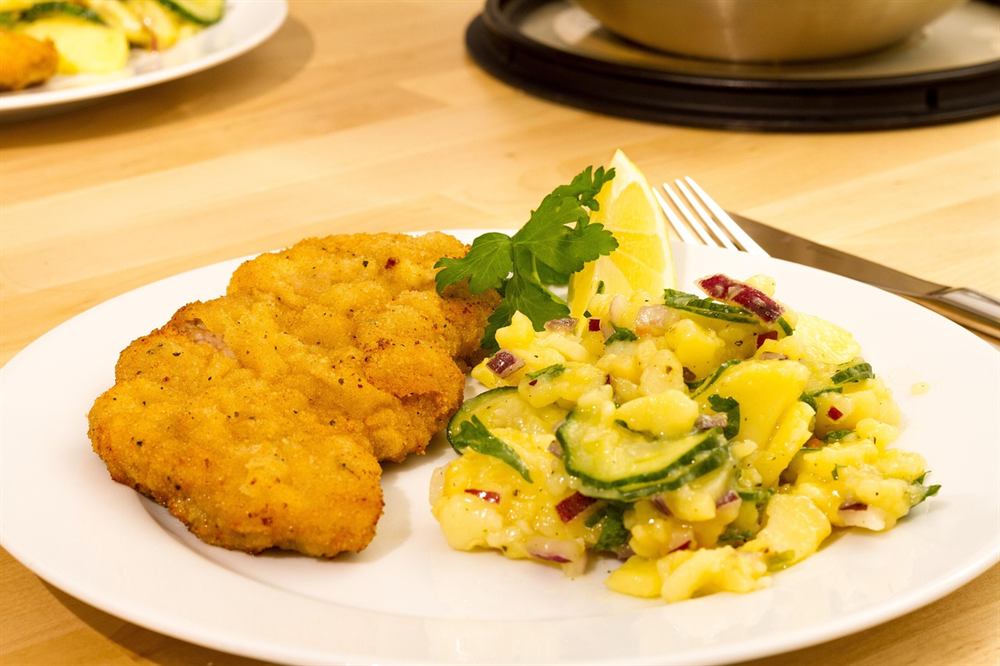
| Austria | Wiener Schnitzel | Thin breaded veal cutlet, often with potato salad | Tiroler Speck (PGI) |
| Belgium | Moules-frites | A pot of steamed mussels served with fries | Jambon d'Ardenne (PGI); Oude Geuze beer (TSG) |
| Bulgaria | Shopska salad | Tomato, cucumber and pepper under grated white cheese | Lukanka Panagyurska sausage (TSG) |
| Croatia | Istrian pršut | Dry-cured ham, sliced thin, often with sheep's cheese | Istarski pršut (PDO, shared with Slovenia) |
| Cyprus | Grilled halloumi | A firm cheese that holds its shape on the grill | Halloumi (PDO) |
| Czechia | Svíčková na smetaně | Braised beef in a creamy vegetable sauce with bread dumplings | Olomoucké tvarůžky cheese (PGI); Pražská šunka, Prague ham (TSG) |
| Denmark | Smørrebrød | Open sandwiches on rye bread | Danablu blue cheese (PGI) |
| Estonia | Kiluvõileib | Dark rye bread topped with marinated sprats and egg | Sõir curd cheese (PGI) |
| Finland | Karjalanpiirakka | Thin rye pasties filled with rice porridge | Karjalanpiirakka, kalakukko fish pie (both TSG) |
| France | Bœuf bourguignon | Beef slowly braised in red wine | Camembert de Normandie, Comté, Roquefort (PDO); Moules de bouchot (TSG) |
| Germany | Nürnberger Rostbratwürste | Small grilled pork sausages | Nürnberger Rostbratwürste, Dresdner Stollen, Lübecker Marzipan (PGI) |
| Greece | Horiatiki | Village salad with a slab of feta | Feta, Elia Kalamatas olives (PDO) |
| Hungary | Gulyás | A paprika-rich beef soup | Szegedi paprika, Szegedi szalámi (PDO); tepertős pogácsa (TSG) |
| Ireland | Irish stew | Lamb or mutton stewed with potatoes and onions | Connemara Hill Lamb, Waterford Blaa bread roll (PGI) |
| Italy | Pizza Napoletana | Soft, thin-centred pizza with a puffy rim, baked very hot | Pizza Napoletana, Amatriciana tradizionale (TSG); Parmigiano Reggiano (PDO) |
| Latvia | Grey peas with bacon | Large grey peas fried with bacon and onion | Sklandrausis, a rye tart with carrot and potato (TSG) |
| Lithuania | Cepelinai | Large potato dumplings filled with meat, served with sour cream | Lietuviškas skilandis smoked sausage (TSG) |
| Luxembourg | Judd mat Gaardebounen | Smoked pork collar with broad beans | Salaisons fumées, marque nationale (PGI) |
| Malta | Pastizzi | Flaky pastries filled with ricotta or mushy peas | Ġbejna tan-nagħaġ sheep's cheese (PDO) |
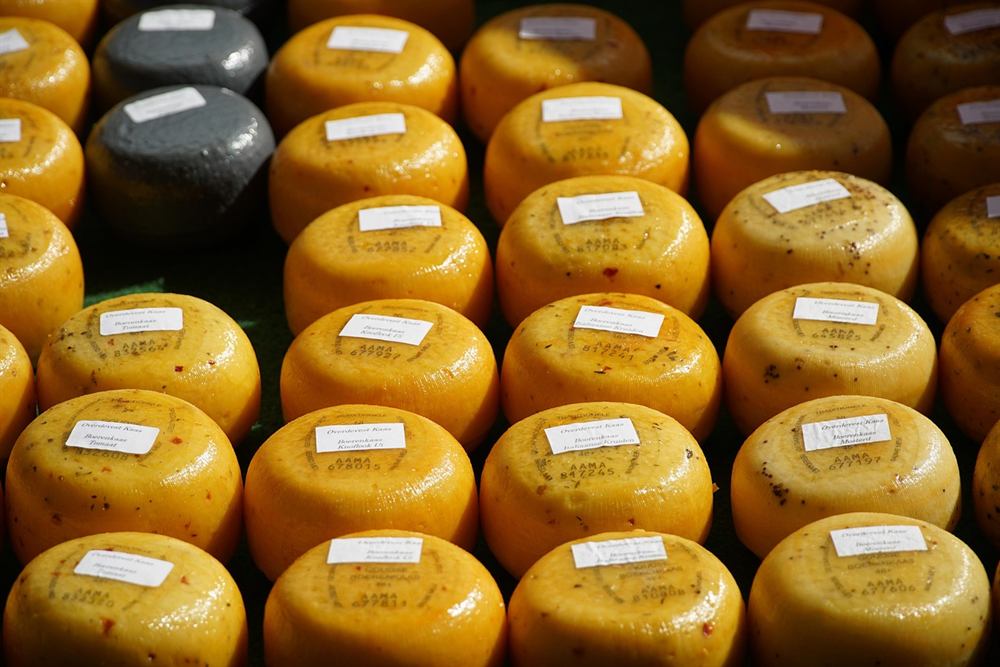
| Netherlands | Hollandse Nieuwe | New-season herring, often from a street stall | Hollandse Nieuwe, Boerenkaas farmhouse cheese (TSG); Noord-Hollandse Gouda (PDO) |
| Poland | Pierogi | Filled dumplings, boiled or fried | Oscypek smoked cheese (PDO); Obwarzanek krakowski (PGI); kabanosy (TSG) |
| Portugal | Bacalhau | Salt cod, cooked in many regional recipes | Bacalhau de Cura Tradicional Portuguesa (TSG); Pastel de Tentúgal, Ovos Moles de Aveiro (PGI) |
| Romania | Sarmale | Cabbage leaves rolled around minced meat and rice | Magiun de prune Topoloveni plum butter (PGI) |
| Slovakia | Bryndzové halušky | Small potato dumplings with soft sheep's cheese and bacon | Slovenská bryndza (PGI) |
| Slovenia | Prekmurska gibanica | A layered cake of poppy seed, cottage cheese, walnut and apple | Prekmurska gibanica, Idrijski žlikrofi dumplings (TSG); Kranjska klobasa (PGI) |
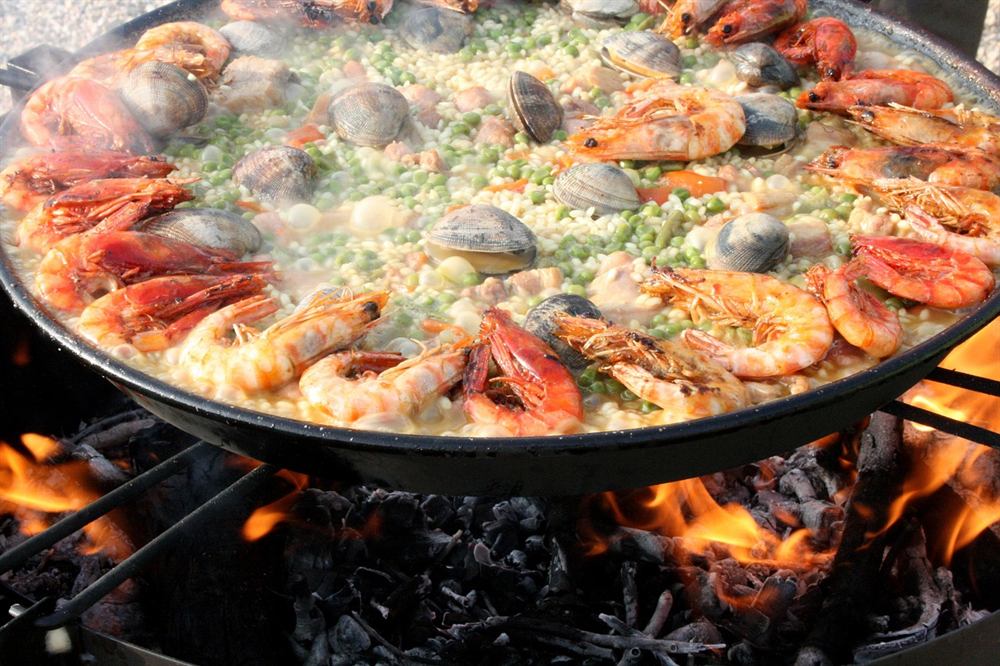
| Spain | Paella | Rice cooked in a wide, shallow pan | Jamón Serrano (TSG); Queso Manchego, Pimentón de la Vera (PDO) |
| Sweden | Köttbullar | Meatballs with cream sauce, potatoes and lingonberries | Falukorv sausage (TSG); Kalix Löjrom roe (PDO) |
How do I find the real thing?
- Read the label, not the flag. Packaged PDO, PGI and TSG foods carry the EU logo next to the registered name. A flag or the word "traditional" means nothing legally.
- Watch for "-style". "Feta-style cheese" or "Neapolitan-style pizza" signals that the product does not meet the specification.
- Go where locals shop. Covered markets and delis sell protected cheeses, hams and sausages by weight, the cheapest way to try several.
- Eat at local times. In southern Europe, dinner often starts at 20:00 or later. See how restaurants work in different countries.
Food tour, cooking class or do it yourself?
Here is how the main options compare, as of October 2026.
| Option | Price | Coverage | Cancellation | Pros | Cons |
|---|---|---|---|---|---|
| Food tour on Klook | Per person, tastings included | Major cities in most EU countries | Set per activity, shown before you pay | Several dishes in one evening, with a guide | Fixed route and time; group pace |
| Food tour on GetYourGuide or Viator | Per person, tastings included | Major cities, often the same operators | Often free up to 24 hours before; some listings are stricter | Large choice; reviews per tour | Same tour on several sites; check what is included |
| Cooking class on Airbnb Experiences | Per person, set by the host | Cities and some rural areas | Usually a full refund up to 24 hours before | You learn one dish properly, often in a home | One or two dishes; quality depends on the host |
| Market and restaurant on your own | Only what you eat | Anywhere | Nothing to cancel | Cheapest; eat at your own pace | Harder to spot the real thing |
Who should pick what: on a short city break, a food tour on your first evening teaches you what to order for the rest of the stay; compare the same tour on two sites before you pay. If you love cooking, a class teaches one dish well. On a budget, a market and the table above get you most of the way. For tips, see how much to tip in European restaurants.
Eating your way through a city? Compare food tours and cooking classes in one place.
Frequently asked questions
What does TSG mean on a food label?
Traditional speciality guaranteed. It protects a traditional recipe or way of making a food, not a place, so a TSG product such as Pizza Napoletana can be made anywhere as long as it follows the registered method.
Which EU country has the most protected foods?
Italy. On 19 October 2026 the EU's eAmbrosia register listed 332 Italian food names with PDO or PGI status, ahead of France with 283 and Spain with 230. Estonia and Malta had one each.
Is Neapolitan pizza protected by the EU?
Yes. Pizza Napoletana has been a traditional speciality guaranteed since 2010. The protection covers the recipe and method, so a pizzeria outside Naples can make it, but only to the registered specification.
Can feta be made outside Greece?
Not under that name in the EU. Feta has been a protected designation of origin for Greece since 2002, so white brined cheese made elsewhere in the EU has to be sold under another name.
Where the figures come from
Checked on 19 October 2026. Official sources first; secondary sources are labelled.
- European Commission: eAmbrosia, the EU geographical indications register (counts retrieved 19 October 2026)
- European Commission: geographical indications and quality schemes explained
- EUR-Lex: Regulation (EU) No 97/2010, Pizza Napoletana (TSG)
- EUR-Lex: Regulation (EU) No 172/2010, Prekmurska gibanica (TSG)
- EUR-Lex: Implementing Regulation (EU) 2020/395, Amatriciana Tradizionale (TSG)
- Airbnb Help Center: cancellation policies for services and experiences
- Truth in Advertising: Viator free cancellation claims and stricter listings (secondary)
- Wikipedia: list of traditional specialities guaranteed by country, as of 31 July 2026 (secondary)